$4,000 a Year on Treatments That Don't Work — Because They Were Never Designed To
High in the mountains of Ushguli, Georgia — one of the highest permanently inhabited villages in Europe — something strange happens. People age without losing their lungs. Men and women in their 70s, 80s, even 90s breathe with the ease of someone half their age. No inhalers on the nightstand. No oxygen tanks in the corner. No morning ritual of coughing up thick, sticky mucus before they can face the day.
For years, researchers assumed it was the altitude. Clean mountain air. Low pollution. Simple living. The usual explanations that allow scientists to file something away without truly understanding it.
But Dr. Michael Renford, an immunorespiratory biologist who spent time living among these people, noticed something nobody else had bothered to look at. The air in Ushguli isn’t actually that clean. Wood smoke fills the homes. Cold, dry winters punish the airways. Viruses and infections pass through the village just like everywhere else.
And yet — almost no chronic lung disease. Almost no one who couldn’t breathe.
The difference wasn’t the air. It was the soup.
What the Village Elders Knew That Your Doctor Doesn’t
From childhood, the people of Ushguli consume a traditional soup made from specific mountain plants — a remedy passed down through generations so casually that nobody thought to study it. It wasn’t medicine. It was just what they ate.
When Dr. Renford began analyzing what these plants actually did inside the body, what he found stunned him. The compounds weren’t simply anti-inflammatory. They weren’t just soothing irritated tissue. They were actively breaking down something that Western medicine had barely begun to understand — microscopic protein structures called pulmonary binding filaments, or PBFs.
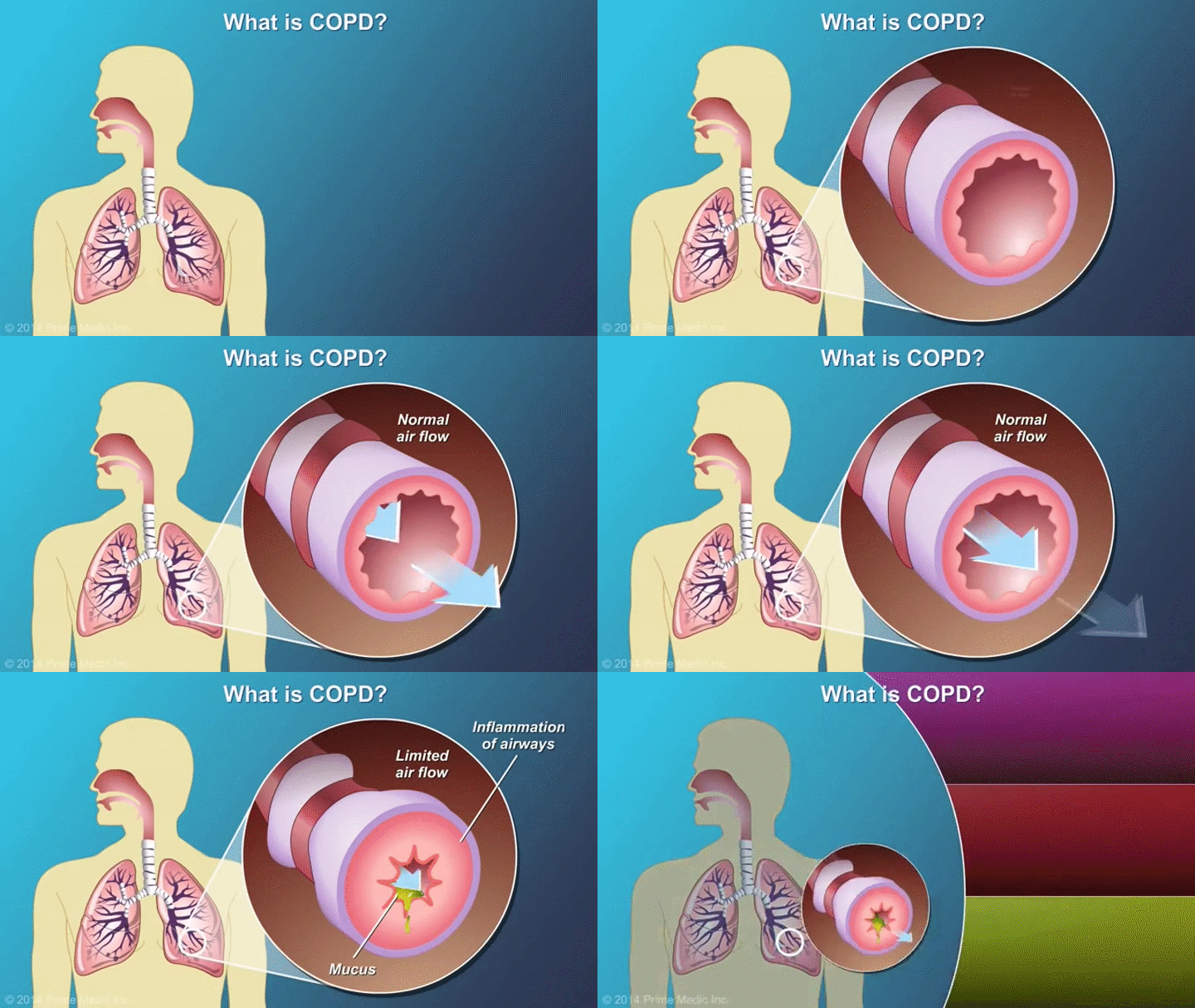
PBFs are sticky, immune-generated protein webs that form inside the airways in response to pollution, smoke, chemicals, stress, and chronic low-grade inflammation. Their original purpose is to trap harmful particles. But in the modern world — where exposure to these triggers never stops — the immune system never stops producing them either.
Over time, PBFs accumulate. They bind to mucus, making it thicker and harder to clear. They attach to airway walls, narrowing the passages your breath moves through. They trigger swelling. They reduce oxygen absorption. They turn a body that was designed to breathe freely into one that fights for every breath.
And not one inhaler, steroid, or mucolytic drug ever built was designed to dissolve them.
The people of Ushguli, without ever knowing what PBFs were or that they were being protected from them, had been continuously flushing these filaments out of their airways for generations. The soup was doing what modern pulmonology has never figured out how to do.
The Problem With the Soup
Here’s what Dr. Renford realized after months of analysis. The compounds in these traditional plants work — but only at concentrations that nobody eating a normal diet could ever realistically consume. To get a clinically meaningful dose of the active ingredients, you would need to eat bowls of these plants every single day for years. The village people could do it because it was simply part of how they ate, every day, from childhood. For everyone else, it was impossible.
So Dr. Renford spent years doing what the village elders had done instinctively — but in a lab. He isolated the specific compounds responsible for breaking down PBFs. He extracted and concentrated them to clinically effective levels. He tested combinations until he found the ratios that worked together as a system, not just individually.
The result was a formula containing seven precisely calibrated compounds — mullein extract, bromelain, maritime pine bark, stinging nettle, tiger milk mushroom, quercetin, and bioperine — each chosen for a specific role in breaking down filaments, clearing mucus, reducing inflammation, and restoring the airways to what they were before the damage started.
“For the first time in years, I can take a full breath without coughing. I didn’t believe anything could help after everything I’d tried. I was wrong.” — David R., 72, Arizona
What Happens When You Clear the Filaments
The people who’ve used this formula don’t describe it as symptom relief. They describe it as their lungs waking up.
Within the first week, most report that their chest feels lighter. The morning congestion that used to take an hour to work through starts loosening on its own. The coughing fits become less violent. Breathing through the nose — something many had quietly stopped expecting — becomes possible again.
By the second and third week, the changes become harder to ignore. Stairs that used to demand a rest stop don’t anymore. Conversations that used to trigger wheezing don’t. Sleep — real, uninterrupted sleep — comes back.
And underneath all of it, something subtler but just as significant: the mental fog lifts. Because when your lungs are blocked, your brain is starved of oxygen. The exhaustion, the difficulty concentrating, the low mood — these aren’t separate problems. They’re downstream effects of airways that haven’t been fully open in years.
Clear the filaments, and you don’t just breathe better. You think better. You move better. You feel like yourself again.
The village elders of Ushguli never knew they were doing any of this. They were just eating what their grandmothers taught them to eat. But the result — lungs that work into old age, breathing that never becomes the thing you’re afraid of — was never a mystery once you understood what their soup was actually doing. Now you don’t have to move to a mountain village to get it. Watch the presentation below to see the full research and what it’s doing for people who’ve tried everything else.
Copyright 2025 by Your Health Pro Blog
All rights reserved.
The content on this website is for informational purposes only and should not be considered medical advice. We recommend consulting a qualified healthcare professional before making any changes to your health regimen. If you have any existing medical conditions or concerns, please seek guidance from your physician.
It is always advisable to conduct independent research and verify information from multiple sources before making health-related decisions. Consult your doctor before following any suggestions mentioned on this site or in relation to the promoted product.
Individual results may vary. The testimonials shared on this page represent personal experiences and are not indicative of guaranteed results.
This website does not provide medical diagnosis, treatment, or professional healthcare advice. Always seek the opinion of a licensed medical professional for any health-related inquiries.
Copyright 2025 by yourhealthpro.online
All rights reserved.